




Let’s start with a brutal truth. Your engine may have hundreds of moving parts, gallons of fuel, clever electronics, and enough computing power to launch a small satellite… and yet it can all be brought to its knees by a rubber band. A glorified elastic strap. That, ladies and gentlemen, is the magnificent absurdity of engine belts. Around Hibbing, MN, where winter mornings can feel like mechanical torture tests, understanding these humble components can mean the difference between driving heroically into the sunrise or waiting miserably for a tow truck.
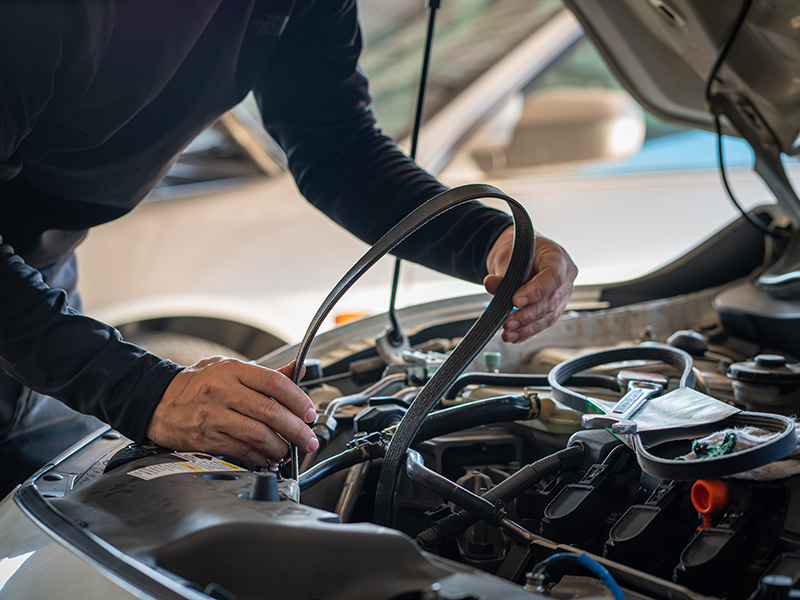
Serpentine Belts: Power and Sudden Catastrophic Failure Potential
The serpentine belt is essentially the overworked intern of your engine bay. It spins the alternator, helps run the power steering pump, drives the air conditioning compressor, and in some cases even keeps coolant circulating. It snakes its way around pulleys like a caffeinated python, doing all the grunt work without applause.
When it fails, everything stops. The steering becomes heavier than a medieval drawbridge. The battery stops charging. Cabin comfort evaporates. What was once a refined machine becomes an immobile monument to poor maintenance decisions.
Timing Belt Precision Engineering and Expensive Consequences
Now we move inside the engine, where the timing belt operates like a Swiss watchmaker with anger issues. Its sole responsibility is synchronizing crankshaft and camshaft rotation so valves open and close at precisely the right moments. Get this wrong and the engine effectively punches itself in the face.
Timing belt failure is not dramatic in a cinematic sense. There is no fireball. Instead there is silence. Expensive, soul-crushing silence. That is why replacement intervals exist. Ignoring them is a bit like ignoring the expiration date on milk and then acting surprised when disaster unfolds.
Legacy Drive Belts and Old-School Mechanical Character
Older vehicles often relied on multiple V-belts, each powering a specific accessory. This arrangement looked like a spaghetti factory had exploded in the engine bay. While less efficient than modern serpentine systems, these belts offered a certain mechanical charm. They also squealed like startled wildlife when worn, providing an audible reminder that maintenance was overdue.
Routine Belt Inspection and Practical Ownership Wisdom
Checking belts is not glamorous. It will not impress your neighbors. It will not earn admiration at social gatherings. What it will do is prevent inconvenient breakdowns during freezing mornings when you would rather be inside drinking coffee than standing beside a lifeless vehicle contemplating life choices.
Listen for squealing. Look for cracks. Replace components at recommended mileage intervals. These simple steps help maintain engine reliability and avoid repair bills that feel like financial ambushes.
Drivers in Hibbing, MN who want to keep their vehicles running smoothly can benefit from professional belt inspections and timely replacement services. Experiencing proper maintenance firsthand often reveals how something as small as an engine belt can have a remarkably large influence on the road ahead.
Connect with us
